Most people are a little nervous before their first hyperbaric oxygen therapy session. That is entirely normal. You are about to sit inside a pressurised chamber and breathe pure oxygen for well over an hour, and unless you have done it before, you have no reference point for how it feels.
This guide walks you through the whole experience at The Brain & Performance Centre in Jumeirah Lakes Towers, from the moment you arrive to the moment you leave, so there are no surprises.
Before your first session: assessment and medical clearance
HBOT treatment at our centre does not start in the chamber. It starts with an assessment.
Every client is seen by a physician first. Depending on why you are coming to us, that assessment can include a detailed medical history, cognitive testing, brain imaging and physical or physiological measurements. The purpose is twofold: to confirm that hyperbaric oxygen therapy is appropriate and safe for you, and to establish a baseline so that your progress can be measured rather than guessed.
You will also be screened for the small number of conditions that rule HBOT out or require extra care. These include an untreated collapsed lung, certain chemotherapy drugs, recent ear surgery and uncontrolled seizures. Your physician will talk you through anything relevant. If you have not yet had that assessment, book your assessment and a tour of the chambers and the rest of this article will make more sense on the day.
What to wear and what to leave outside
Because the chamber is an oxygen-rich environment, there are strict rules on what can come in with you. They exist for good reason and our team will remind you every time.
- Wear the 100 percent cotton clothing provided by the centre. Synthetic fabrics can generate static.
- No electronics of any kind, including phones, smartwatches and hearing aids unless approved by the hyperbaric team.
- No lighters, matches, hand warmers or anything that produces heat.
- No petroleum-based products on the skin or hair, so skin lotions, hair oils, lip balm and most make-up on session days.
- Jewellery, glasses and contact lenses are usually fine, but check with the team.
You will be given a locker and a changing area. Arrive a few minutes early on your first day so the changing routine feels unhurried.
Inside the chamber
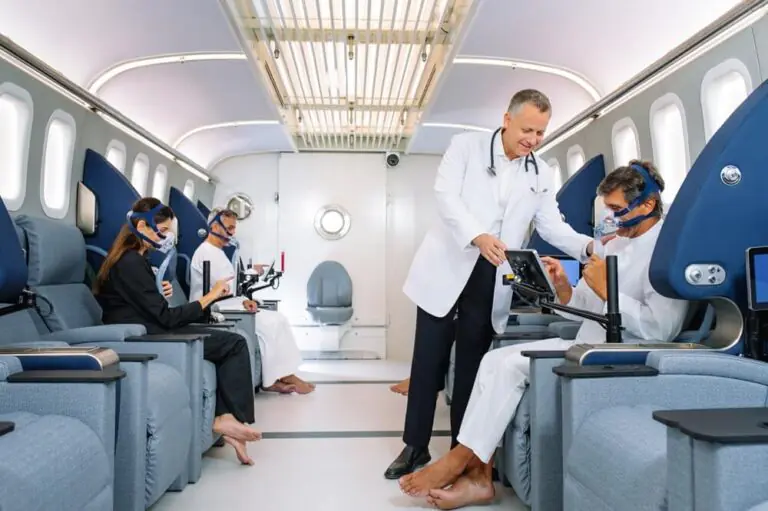
Our chambers are multiplace, which means several people are treated at the same time, seated in comfortable chairs, with a trained attendant inside with you throughout. This is one of the biggest differences between a medical hyperbaric centre and the single-person soft chambers you may have seen advertised. There is always someone beside you who can help.
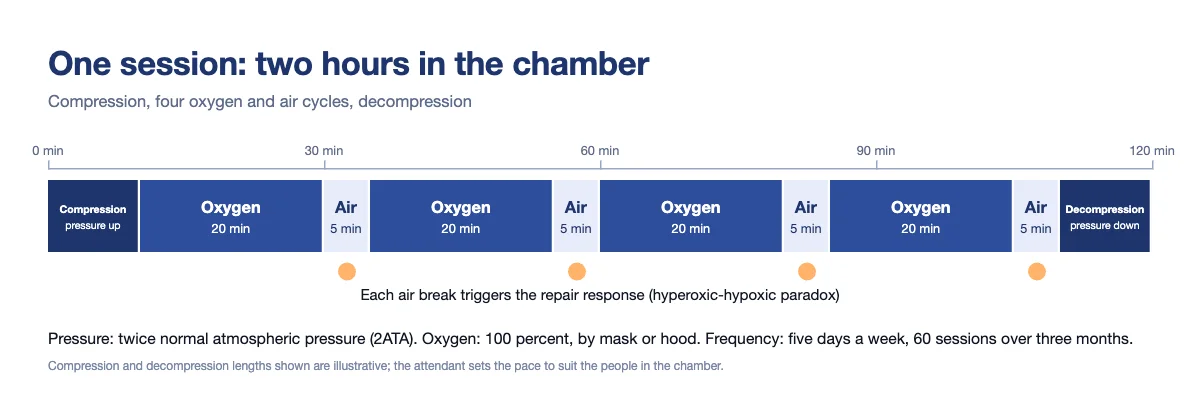
Compression. Once the door closes, the pressure inside the chamber rises gradually over several minutes. This is the part first-timers ask about most. As the pressure increases you will feel a fullness in your ears, very similar to a plane descending. You relieve it the same way: swallow, yawn or gently pinch your nose and blow. The attendant will coach you through it, and the compression is slowed or paused if you need more time.
Breathing oxygen. At treatment pressure, which is twice normal atmospheric pressure, you put on a mask or a soft hood and breathe 100 percent oxygen. You can perform your personal brain training on your tablet computer, listen to music, play different mind games (chess, sudoku and more), watch a TED Talk, bring a book or simply rest. Most people describe the sensation as unremarkable, which is exactly how it should feel.
Air breaks. The session runs in cycles: 20 minutes breathing oxygen, then a five-minute break breathing the normal chamber air, and so on. These breaks are built into the protocol deliberately. They reduce the risk of oxygen toxicity, and they do something more interesting. Each time you come off the oxygen, the sudden drop from very high to normal oxygen levels is read by your cells as if oxygen had become scarce, and they switch on the same regenerative processes the body uses in real oxygen shortage, without any actual shortage occurring. This is known as the hyperoxic-hypoxic paradox, and it is central to why the protocol is structured the way it is.
Decompression. At the end of the session the pressure returns to normal, again gradually. Your ears will “pop” in the other direction, which most people find easier than the compression phase.
How long does a session take?
Each session is two hours in the chamber. Allow a little longer than that for your first visit, to cover changing time and a short check-in with the team afterwards.
After the session
Most people walk out and get on with their day. Some feel pleasantly tired, particularly in the first week, and a few notice mild ear pressure that clears within minutes. Temporary changes in vision can happen over a longer course of sessions and usually settle after treatment ends. Drink water, eat normally and let the team know if anything feels unusual.
Then you come back the next day, and the next. Our neurological programme is 60 sessions over three months, five days a week, because HBOT for neurological conditions works cumulatively. A single session is pleasant. A full course is where the change happens.
Fitting sessions into a Dubai day
The centre is in Jumeirah Lakes Towers, a few minutes’ walk from DMCC Metro station and a short drive from Dubai Marina, Media City and the Marina end of Sheikh Zayed Road. Most clients settle into a fixed daily slot: early morning before the office, or late afternoon on the way home. Sessions run through the summer months and adjusted hours are available during Ramadan. Tell the team your constraints at your first visit and they will build the schedule around them.
Why people choose to visit before they commit
Reading about how a hyperbaric chamber works is one thing. Standing next to it, seeing how spacious it is, meeting the attendants and the medical team, and asking the questions you actually have is another. We encourage prospective clients and families to come and see the centre before deciding anything.
The Brain & Performance Centre, a DP World Company, is a UHMS-accredited facility that has delivered tens of thousands of hyperbaric treatments to adults and children. The tour takes around half an hour and there is no obligation.
Book a consultation and a tour, and see the chambers for yourself before you decide, or call 800-2848 from within the UAE.
Frequently asked questions
Does hyperbaric oxygen therapy hurt?
No. The only sensation most people notice is ear pressure during compression, which you relieve by swallowing or yawning. The attendant inside the chamber helps you manage it.
Can I eat before a session?
Yes. A light meal an hour or two beforehand is ideal. Avoid alcohol and carbonated drinks on session days.
Can I bring someone with me?
Family members are welcome to accompany you to the centre and, for children, a parent can often sit in the chamber. Ask the team when you book.
What if I am claustrophobic?
Multiplace chambers are large, well lit and you can see out. Most people who worry about claustrophobia find the space far less confining than they expected. Tell us in advance and we will take extra time on your first session.
More answers about the programme are on our programme FAQs page.